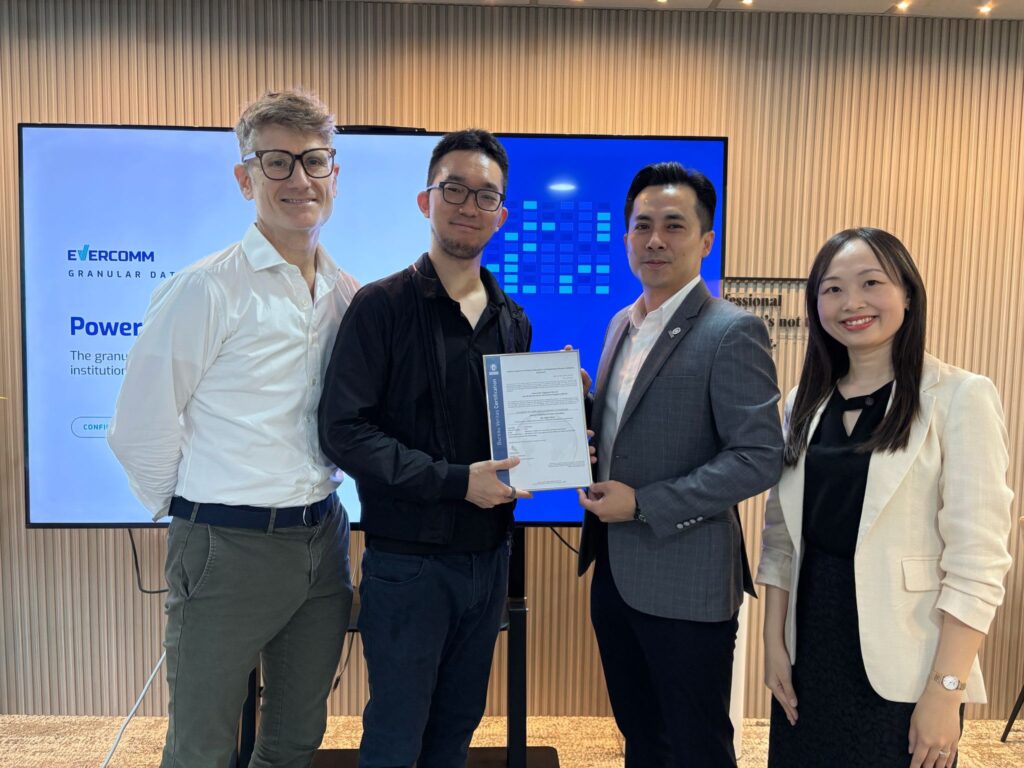
Singapore, 12 June 2026 — Bureau Veritas has validated Evercomm Singapore Pte Ltd’s NXMap product carbon footprint (PCF) platform for the calculation and reporting of product-level carbon footprints in accordance with
ISO 14067:2018, ISO 14040, and ISO 14044. The validation marks a significant milestone for manufacturers, exporters, and supply chain teams seeking a verification-ready pathway to product carbon footprint reporting.
The validation, formally issued on 14 May 2026 under reference BVQA_0008_20260520, confirms that the NXMap CFP Calculation and Reporting Software (Version 3.0) supports accurate product carbon footprint quantification based on Life Cycle Assessment (LCA) methodology. The assessment covered emissions quantification across relevant life cycle stages, system boundaries, and processes applicable to product carbon footprint studies as defined under the specified standards.
Deepening a Strategic Partnership for Product Carbon Footprint Verification
The validation builds on the strategic partnership between Bureau Veritas and Evercomm established in
November 2023, when the two organisations joined forces to help Southeast Asian businesses tackle decarbonisation goals through digital verification and training. Bureau Veritas serves as Evercomm’s digital verification technology partner for greenhouse gas accounting and reporting.
With this latest milestone, the partnership extends beyond organisational carbon accounting into product carbon footprint reporting — addressing growing demand from manufacturers, exporters, and supply chain teams responding to customer disclosure requirements, tender specifications, CBAM-related obligations, and third-party verification needs.
The shift from organisational to product-level reporting reflects a broader industry trend. Customers, regulators, and procurement teams increasingly require auditable carbon data at the SKU or product-line level — not just facility-wide totals. Manufacturers that can provide verified reports at the product level gain a measurable advantage in tenders, trade compliance, and buyer negotiations.
For many manufacturers, the challenge has not been willingness but capability. Traditional LCA consulting engagements can take three to six months per study, cost tens of thousands of dollars, and produce static PDF reports that are difficult to update when materials, suppliers, or processes change. A validated digital platform changes the equation — enabling companies to produce and maintain product carbon footprint studies at a fraction of the time and cost.
Bureau Veritas representatives
Eva Lee, Senior Manager, Sustainability Development, and
Ng Sheng Wa, Southeast Asia Certification and Sustainability Manager, were instrumental in guiding the validation process. Their expertise in ISO-level verification ensured that the NXMap platform meets the rigorous standards expected by verifiers, auditors, and regulatory bodies across the region.
NXMap Product Carbon Footprint Platform: How It Works
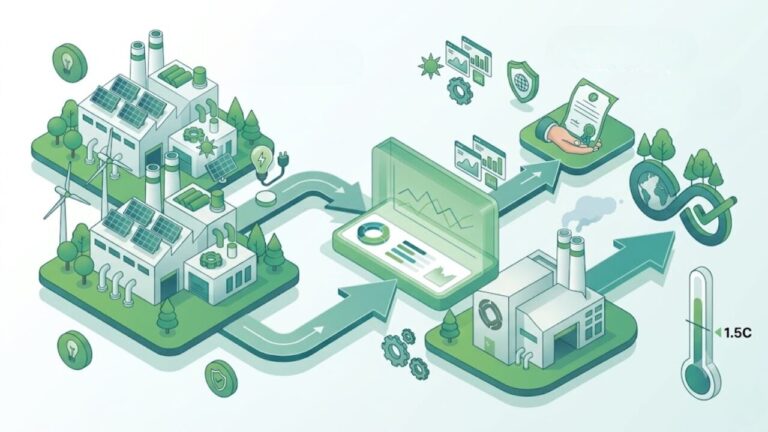
NXMap Product is Evercomm’s dedicated platform for companies that need reliable, auditable product carbon footprint results without depending on complex manual spreadsheets or specialist Life Cycle Assessment software. The platform translates what has traditionally been a consultant-dependent, months-long process into a structured digital workflow that sustainability teams and operations managers can run in-house.
The platform provides:
– ISO 14067-aligned PCF reporting with study details, calculation records, data quality checks, sensitivity and uncertainty analysis, audit trails, and verification disclosures
– Ecoinvent database integration for licensed access to lifecycle inventory data within the product carbon footprint study workflow
– Guided PCF workflow for structured study setup, data collection, review, and report preparation
– Emission factor management and bulk upload to reduce manual entry and improve consistency across product studies
– Hotspot analysis with Sankey diagram visualisation to identify which materials, processes, or lifecycle stages drive the product carbon footprint
Each study produced by the platform follows the full ISO 14067 reporting structure — including goal and scope definition, system boundary documentation, data quality assessment, and sensitivity analysis. This means the output is not just a number but a complete, auditable record that verifiers like Bureau Veritas can assess against the standard without requesting supplementary documentation.
Critically, the platform maintains a full audit trail of every data input, emission factor selection, and calculation step. When a verifier reviews a product carbon footprint study, they can trace any reported figure back to its source data and methodology. This level of transparency is difficult to achieve with spreadsheet-based approaches, where formulas, version history, and data provenance are often lost or fragmented across multiple files.
The platform is built for manufacturers, sustainability teams, supply chain teams, consultants delivering ISO 14067-aligned studies, and verifiers reviewing calculation records and assumptions.
Why Product Carbon Footprint Reporting Matters Now
The commercial and regulatory pressure for product carbon footprint disclosure is intensifying across multiple fronts. The EU Carbon Border Adjustment Mechanism (CBAM) requires importers to report embedded emissions in certain goods entering the EU — and the transitional phase is already underway. Exporters in Southeast Asia who cannot provide verified product carbon footprint data face the risk of delayed shipments, additional costs, or lost contracts.
Beyond CBAM, customer-driven sustainability requirements are reshaping procurement. Major buyers in automotive, electronics, construction, and consumer goods now include PCF data as a qualification criterion in tenders and supplier assessments. A verified report is no longer a differentiator — it is increasingly a prerequisite for doing business.
In Southeast Asia specifically, the pressure is compounding. Singapore’s sustainability reporting requirements under SGX, combined with the International Sustainability Standards Board (ISSB) guidance on Scope 3 and value chain emissions, are pushing companies to quantify emissions at the product level. Thailand’s Board of Investment incentives now reference carbon measurement capability. Malaysia’s carbon tax trajectory signals that product-level accounting will follow organisational-level requirements. The organisations that build product carbon footprint capability now will be better positioned when mandatory product-level disclosure arrives across the region.
For supply chain teams, the ability to produce a credible product carbon footprint report on demand, rather than scrambling when a buyer or regulator asks, is becoming a core operational competency. Companies that treat this as a one-off compliance exercise will find themselves repeating the work every time requirements tighten. Those that invest in a repeatable, validated platform embed the capability into their operations permanently.
Built by a Cross-Border Team
The NXMap product carbon footprint platform was developed under the product management of Rob Field-Marsham, drawing on expert developers and knowledge managers across Evercomm’s offices in Myanmar, Thailand, China, and Singapore.
Key team members who contributed to the platform’s development and successful certification include Kaung Tun, Phyu Phway, and Paing Soe from the Myanmar team, alongside colleagues in Thailand, China, and the Singapore headquarters. The cross-border development approach reflects Evercomm’s operating model — a Singapore-headquartered company with deep technical capacity distributed across Asia-Pacific.
The team’s combined expertise in carbon accounting methodology, software engineering, and industrial data management was essential to building a platform that satisfies both the technical rigour of ISO 14067 and the practical usability requirements of manufacturing teams who need to run product carbon footprint studies without specialist LCA training. Evercomm’s distributed development model also enables rapid iteration — feedback from early adopters in Singapore and Thailand has been incorporated into the platform’s workflow design, data validation logic, and report formatting.
Market Readiness and What Comes Next
The Bureau Veritas validation signals NXMap Product’s readiness to serve manufacturers and supply chain organisations across Southeast Asia and beyond. As regulatory and commercial pressure for product-level carbon disclosure intensifies, the platform provides a verification-ready digital pathway from product data to auditable product carbon footprint reports.
For manufacturers evaluating how to meet growing product carbon footprint requirements, the combination of a Bureau Veritas-validated platform and structured ISO 14067 workflow removes two of the biggest barriers: credibility and complexity. The platform delivers audit-ready results without requiring specialist LCA expertise or months of consultant engagement.
The validation also positions Evercomm and Bureau Veritas to continue developing innovative products together, both for Bureau Veritas’s internal use and for external customers across the region. As product carbon footprint reporting moves from voluntary to expected — and eventually to mandatory — the partnership ensures that both organisations remain at the forefront of verified, digital carbon accounting.
Companies interested in exploring the NXMap product carbon footprint platform can contact Evercomm directly for a guided walkthrough of the study workflow, reporting structure, and verification process. Whether you are responding to a buyer’s request, preparing for CBAM obligations, or building internal capability ahead of regulatory timelines, the platform is designed to get you from raw data to a verified product carbon footprint report in weeks rather than months.